Corporate Finance • Capital Allocation • Independent Research
Sergey Kyunttsel
Corporate-finance and capital-allocation professional, business owner, and independent researcher working across FP&A, investment analysis, lifecycle economics, and realized value.
Sergey Kyunttsel, PhD in Economics, brings more than 15 years of corporate-finance, FP&A, capital-allocation, business-owner, and investment-analysis experience. His professional and research work connects financial modeling, executive decision support, lifecycle economic analysis, project implementation, and long-term value realization.
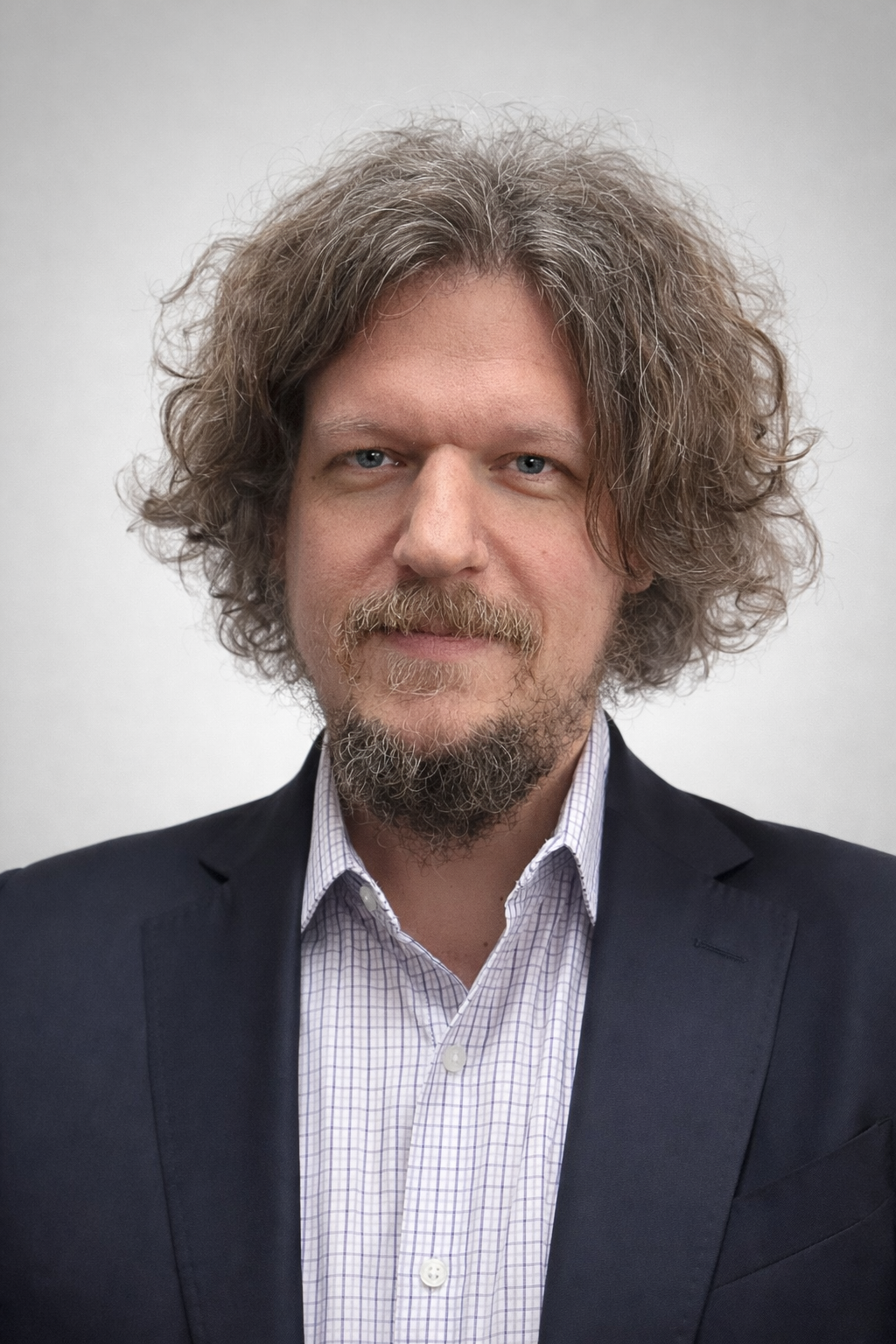
Finance and economic analysis for decisions that must work in practice.
Sergey's professional work spans corporate finance, FP&A, financing, financial modeling, investment evaluation, business ownership, and executive decision support. His broader interests include financial planning and private wealth, alongside independent research into how capital decisions produce durable, measurable results.
Current research areas include energy-efficiency project selection, projected versus achieved savings, lifecycle capital-allocation losses, industrial lighting modernization, distributed generation and zero-overflow industrial supply arrangements, and the conversion of technical improvements into verified economic value.
Professional affiliations include Senior Member, Association of Energy Engineers; Member, Cogeneration & Distributed Generation Institute; Member, IEEE; and Member, IEEE Power & Energy Society.
Education, examinations, and continuing development.
Sergey holds a PhD in Economics. He passed the Securities Industry Essentials examination in June 2026 and the Series 65 examination in July 2026. He has been approved for CFP Board's Accelerated Path and is completing the 2026 CFP Board Financial Planning Externship.
These examination and professional-development milestones are not presented as an active securities license, registration, or offer of financial-advisory services.
Research, publications, and professional writing.
Sergey's research and professional writing focus on lifecycle economic outcomes, capital-allocation quality, energy-resource efficiency, industrial modernization, and the gap between projected and achieved economic effect.
His work connects applied project experience with broader questions of economic decision-making: how organizations compare alternatives, allocate capital, manage implementation risk, verify achieved results, and evaluate whether modernization projects produce durable value in practice.
Selected scholarly manuscripts in this research area are currently under editorial review.
Three practitioner articles have been accepted and are in production for Association of Energy Engineers publications. Additional forthcoming work includes an article for FMJ.
Published by CFO.com on July 21, 2026: Why Modernization Projects Pass the Payback Test and Still Lose Value. The article explains why modernization projects can satisfy initial payback requirements yet lose value during implementation, and argues that finance ownership should extend beyond capital approval to preserve traceability between the approved business case, delivered scope, and realized results.
The SELRA research-agenda working paper is publicly available on SSRN.
Selection and Economic-Lifecycle Realization Architecture.
SELRA, the Selection and Economic-Lifecycle Realization Architecture, is Sergey's research program for evaluating industrial energy-resource investment decisions across project selection, lifecycle economic evaluation, realization, and verification.
SELRA.org is the dedicated research-program site. This site remains Sergey's broader personal and professional identity site, connecting the research program with economics, capital allocation, industrial energy systems, and Sergey's wider professional work.
The SELRA research-agenda working paper is publicly available on SSRN.
Public technical contribution and developer background.
Sergey's earlier public technical work includes Java SE/EE, JSF, PrimeFaces, Spring, Hibernate, and web application development, with long-standing participation on Stack Overflow under the historical handle skuntsel.
This technical background supports his broader work in applied research, data analysis, lifecycle modeling, economic modeling, and decision-support tools.

Energy-resource efficiency and industrial modernization.
Sergey's applied work and research interests include industrial energy projects where engineering conditions, economic modeling, implementation discipline, and post-project verification jointly determine the final result.
Relevant areas include industrial lighting modernization, distributed generation, zero-overflow industrial supply arrangements, HVAC and other industrial energy systems, and project-realization conditions that affect whether projected savings become achieved savings.
Lifecycle economics and capital-allocation quality.
Modernization and efficiency projects are often presented as cost-saving initiatives. In practice, they are capital-allocation decisions. A technically reasonable project may still underperform if alternatives are compared too narrowly, implementation risks are ignored, or achieved results are not measured against the original economic logic.
Sergey's current writing explores energy-efficiency project selection, lifecycle capital-allocation losses, realized-value analysis, and the evidence and verification practices needed to improve the conversion of committed capital into measurable long-term value.
Corporate finance, planning, and private-wealth interests.
Sergey's experience includes corporate finance, FP&A, capital allocation, financial modeling, financing, investment analysis, business ownership, and executive decision support. His professional development also includes financial planning and private wealth as areas of study and interest.
This perspective complements his research and energy-efficiency work: better outcomes rarely come from isolated decisions. They come from structure, disciplined analysis, and choices that remain aligned through implementation. This site does not present investment-management or financial-advisory services.
Professional profile:
Contact
For research, publications, expert review, jury or panel invitations, collaboration, methodology application or use, media, and general professional inquiries:
Please do not submit confidential financial, legal, tax, medical, account, or other personal information by email or through any general inquiry channel.